What wood to buy for a first project
Eastern white pine and yellow poplar, from The Wood Database. I have not built with either.
Researched in October 2026. Reviewed . Next review: April 2027. 3 sources
Also in español
Research guide: I have not tested these products. Affiliate disclosure As an Amazon Associate I earn from qualifying purchases.
How I built this guide
Sources I read. The Wood Database entries for eastern white pine and yellow poplar.
What I cross-checked. Janka 380 lbf against 540 lbf, and the notes on hand-tool work and fuzzy sanding.
What I could not verify. What your lumberyard calls “pine.” It may not be Pinus strobus. No board-foot price.
Most sources suggest this if you will cut and plane by hand and you can paint or accept a plain face; skip it if you want a show hardwood, or a board that touches food.
As an Amazon Associate I earn from qualifying purchases.
Eastern white pine board
Budget. One source, no second opinion.
The Wood Database: Janka 380 lbf, easy with hand and machine tools, glues and finishes well. Plantation stock is not old-growth.
Soft. Dents. Resin odor while you cut it.
Opens Amazon. Price and stock change. I have not used this. Affiliate link: if you buy, I may earn a commission. You do not pay more.
Yellow poplar board
Budget. One source, no second opinion.
The Wood Database: Janka 540 lbf, very easy to work, and a utility wood rather than a show wood. It can fuzz when sanded.
Green or purple streaks. Not a furniture face unless you paint it.
Opens Amazon. Price and stock change. I have not used this. Affiliate link: if you buy, I may earn a commission. You do not pay more.
The first board should be a wood a published sheet calls easy, not a wood a catalog calls beautiful. I have not built the project. A first cutting board, which wants a different species, is here.
Two sheets
High for the two numbers below. They are one database, not a shop test, and they are not every “pine” at a home center.
Eastern white pine, Pinus strobus, is listed at a Janka hardness of 380 lbf. The sheet says it is easy with hand and machine tools, glues and finishes well, and has a faint resinous smell while you work it. Heartwood decay resistance is moderate to low. It is widely sold as construction lumber. The same page’s comments, which I am not treating as the sheet, say plantation pine is softer and less stable than old growth.1
Yellow poplar, Liriodendron tulipifera, is listed at 540 lbf. The sheet says it is very easy to work and that one downside of the softness is a fuzzy surface, especially while shaping or sanding, so finer grits may be needed. It is described as seldom used for its looks: pallets, crates, upholstered frames, pulp.2
A drawing of grain direction is above. It is ours. It is not a photo of these species.
What I am not claiming
I do not have a Janka number in this note for oak, walnut or maple, so I am not ranking them. Harder wood is a later problem. I also do not know what your yard’s “pine” sticker means. If it is not Pinus strobus, the 380 lbf figure does not travel with the board.
My take
For a first box, a shelf, or a joint you will saw and plane by hand, these two sheets point at white pine or yellow poplar, with poplar slightly harder and more likely to fuzz under sandpaper. Paint is the honest finish for poplar if you care how it looks. The grit note is here. The glue for a dry interior joint is here. If the joint is a screw, Settich’s note on a smaller pilot in pine is here.
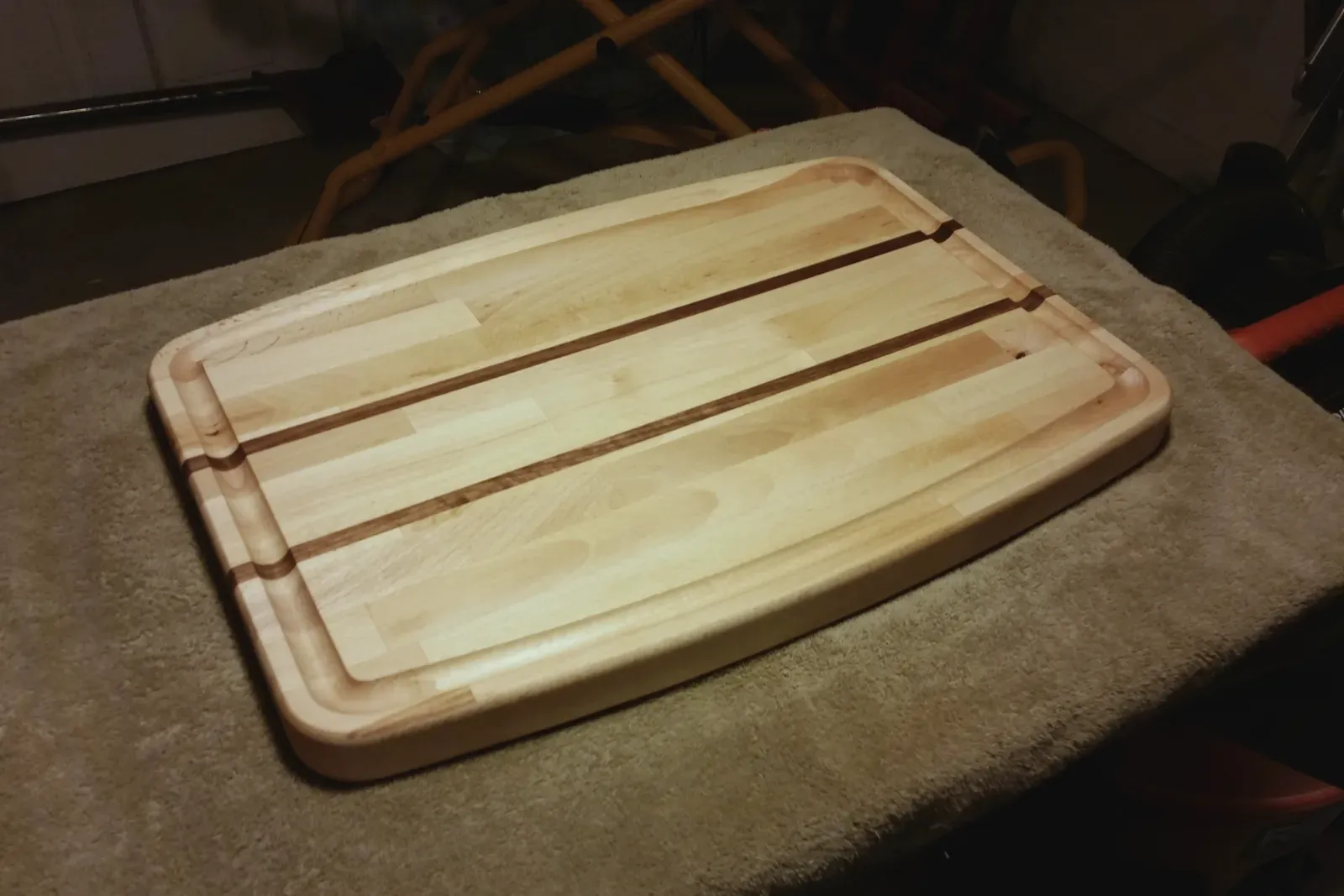
The photo is beech. It is not the recommendation.
Where this comes from
- The Wood Database. Eastern white pine. Species sheet. The Wood Database Consulted 29 Oct 2026. back
- The Wood Database. Yellow poplar. Species sheet. The Wood Database Consulted 29 Oct 2026. back
- Veta. A first cutting board. This notebook. Veta 29 Oct 2026. back
Changes in this guide
- First note. Two species only, both with a published sheet.
Common questions
Is poplar the tree on the street?
Not in this note. Yellow poplar here is Liriodendron tulipifera, which The Wood Database treats as a utility wood. Ask the yard for the species, not the nickname.
Can I make a cutting board from pine?
I would not, from these sheets. Pine is soft and the heartwood is only moderate to low in decay resistance. A food board is a different project.