Diamond plate or water stone: a first sharpening setup, from what I read
Diamond plates, water stones, and a word on oil stones and sandpaper, from three Fine Woodworking pieces and two working woodworkers. I have not sharpened on any of them.
Researched in October 2026. Reviewed . Next review: April 2027. 5 sources
Also in español
Research guide: I have not tested these products. Affiliate disclosure As an Amazon Associate I earn from qualifying purchases.
How I built this guide
Sources I read. Three Fine Woodworking pieces (2004, 2011, 2014), Richard Maguire at The English Woodworker, and a Tools for Working Wood shop blog.
What I cross-checked. Where “stays flat” and “wears out sooner than you think” are both said about diamond plates, and whether an 8000 diamond and an 8000 water stone leave the same scratch.
What I could not verify. Paul Sellers’ and Christopher Schwarz’s reasons, seen only as search summaries. Any price. How long a thin, cheap plate lasts.
Most sources suggest this if want one flat surface that needs no soaking, and can add a finer stone later; skip it if already own water stones and a way to flatten them, or want the finest polish from a single stone.
As an Amazon Associate I earn from qualifying purchases.
Coarse diamond plate
Mid. More than one source agrees.
Fine Woodworking’s Brian Boggs says diamond cuts fast with almost no upkeep, and his plate stayed flat for five years. Tools for Working Wood also says it stays flat. A coarse one can flatten water stones later. I have not used one.
Puchalski says plates wear out sooner than people expect. A fine diamond leaves a deeper scratch than a water stone of the same grit.
Opens Amazon. Price and stock change. I have not used this. Affiliate link: if you buy, I may earn a commission. You do not pay more.
Norton 1000/8000 combination water stone
Budget. Maker or shop pages, not an independent test.
Tools for Working Wood names it as their budget water stone: a sharpening side and a finishing side in one stone.
Water stones need regular flattening and are messy. The same post calls 1000 straight to 8000 a big jump.
Opens Amazon. Price and stock change. I have not used this. Affiliate link: if you buy, I may earn a commission. You do not pay more.
Water stone set: 800, 1200 and 6000
Mid. One source, no second opinion.
David Charlesworth’s starter set in Fine Woodworking, with a nagura stone. He says an 8000 polishes better than Arkansas, ceramic or diamond.
Built to erode, so a beginner can hollow one fast. Left in water in a freezing shop, they can crack.
Opens Amazon. Price and stock change. I have not used this. Affiliate link: if you buy, I may earn a commission. You do not pay more.
India and hard Arkansas oil stones
Mid. More than one source agrees.
Tools for Working Wood says oil stones stay flat for years, with an India for coarse work and a hard Arkansas for the fine edge. Richard Maguire prefers oil stones for quick touch-ups.
Slow. Both sources say too slow for hard, thick modern irons.
Opens Amazon. Price and stock change. I have not used this. Affiliate link: if you buy, I may earn a commission. You do not pay more.
Lapping film sample pack
Budget. Maker or shop pages, not an independent test.
Tools for Working Wood’s low-cost start for someone unsure about sharpening: consistent, no flattening, easy to replace.
The same post says replacing film costs more than stones over time.
Opens Amazon. Price and stock change. I have not used this. Affiliate link: if you buy, I may earn a commission. You do not pay more.
A new chisel needs an edge before it is any use. I have not put one on yet. This note is about what you sharpen on, not how you hold the blade. The how is in my sharpening note.
Diamond plate or water stone: the short answer
A diamond plate is a steel plate with diamond grit bonded to its face. It stays flat, needs little upkeep, and cuts faster than other abrasives of the same grit.1 A water stone is a synthetic stone made to wear away as you use it. That keeps it cutting, and it is also why you have to flatten it.2 Water stones go finer. A fine water stone leaves a shallower scratch than a diamond plate with the same number.3
So, for a beginner with a few chisels: a diamond plate is less to look after. Water stones give a finer polish, if you will also keep them flat. The shop blog I read does both: diamond to shape and sharpen, then an 8000 water stone to finish.4
What the experts say
Medium. Three Fine Woodworking authors, three different years. They agree on upkeep. They do not agree on the finish.
Brian Boggs prefers diamond. He says it cuts fast and needs almost no maintenance, and that his plate stayed flat for five years. It costs more up front. His argument is that faster sharpening pays that back. He also says diamond handles every steel well, including A2 and carbide, where softer abrasives like water stones do worse.5
David Charlesworth prefers water stones. He keeps his 800 and 1200 stones sitting in shallow water. Stones of 4000 and finer stay dry and get sprayed before use. A coarse stone stored dry wants about five minutes in water. He warns that the stones are built to erode, so a beginner can hollow one fast. In a shop that freezes, do not leave them in water: they can crack. His starter set is 800, 1200 and 6000 plus a nagura stone. He says an 8000 water stone polishes much better than Arkansas, ceramic or diamond.6
Deneb Puchalski flattens water stones on a coarse diamond plate bigger than the stone. He uses 120 micron, which he puts near P120 paper. His warning: diamond plates wear out sooner than many people expect. Keep one plate only for flattening, because sharpening blades wears small spots into it.7
Oil stones and sandpaper, briefly
Richard Maguire prefers oil stones. They suit quick touch-ups and a shop with no fixed sharpening station. He says they are too slow on thick, hard irons, which is where diamond wins.8 Tools for Working Wood says oil stones stay flat for years but cut slowly. They name an India stone for coarse work and a hard Arkansas for the fine edge. Sandpaper on a flat backing is the cheap start. Their catch: the finest paper is hard to find, and film or paper you keep replacing ends up costing more than stones.9
What owners report
Maguire writes as a working woodworker, not a lab. He finds water stones soft and messy, cold to use in an unheated shop, and in need of constant care. Flattening breaks his rhythm. He bought diamond plates, likes that they need no soaking or flattening, and still found them nothing special. He plans to go back to oil.10
Readers under Charlesworth’s article name King and Sigma stones and argue water against diamond. A reader under the shop post says technique matters more than an expensive system and suggests a combination India stone. I am treating comments as comments.
Where they disagree
The finish. Charlesworth and the shop blog both put a fine water stone ahead of diamond for polish. Boggs puts diamond ahead for hard modern steels. I cannot settle that without an edge to look at, and I have none.
How long a plate lasts. Boggs had five flat years. Puchalski says plates wear sooner than people think. They may be talking about different use: Puchalski’s point is about one plate doing both flattening and sharpening.
The grit jump. The shop blog names a Norton 1000/8000 stone as the budget water stone, and in the same post calls 1000 straight to 8000 a big jump that slows the finish. Both sentences are on one page.
My sharpening note leans on Paul Sellers, who uses diamond plates. His pages would not load for me this time, so he is not a source here.
My take
If I bought today, for chisels only, I would start with one diamond plate. Nothing in these sources says it needs soaking or flattening, and a coarse one can flatten a water stone later. I would add a fine water stone when I want the polish two sources describe. If I did buy water stones, I would keep a plate just for flattening, as Puchalski says. And if my shop froze, I would not leave them in water.
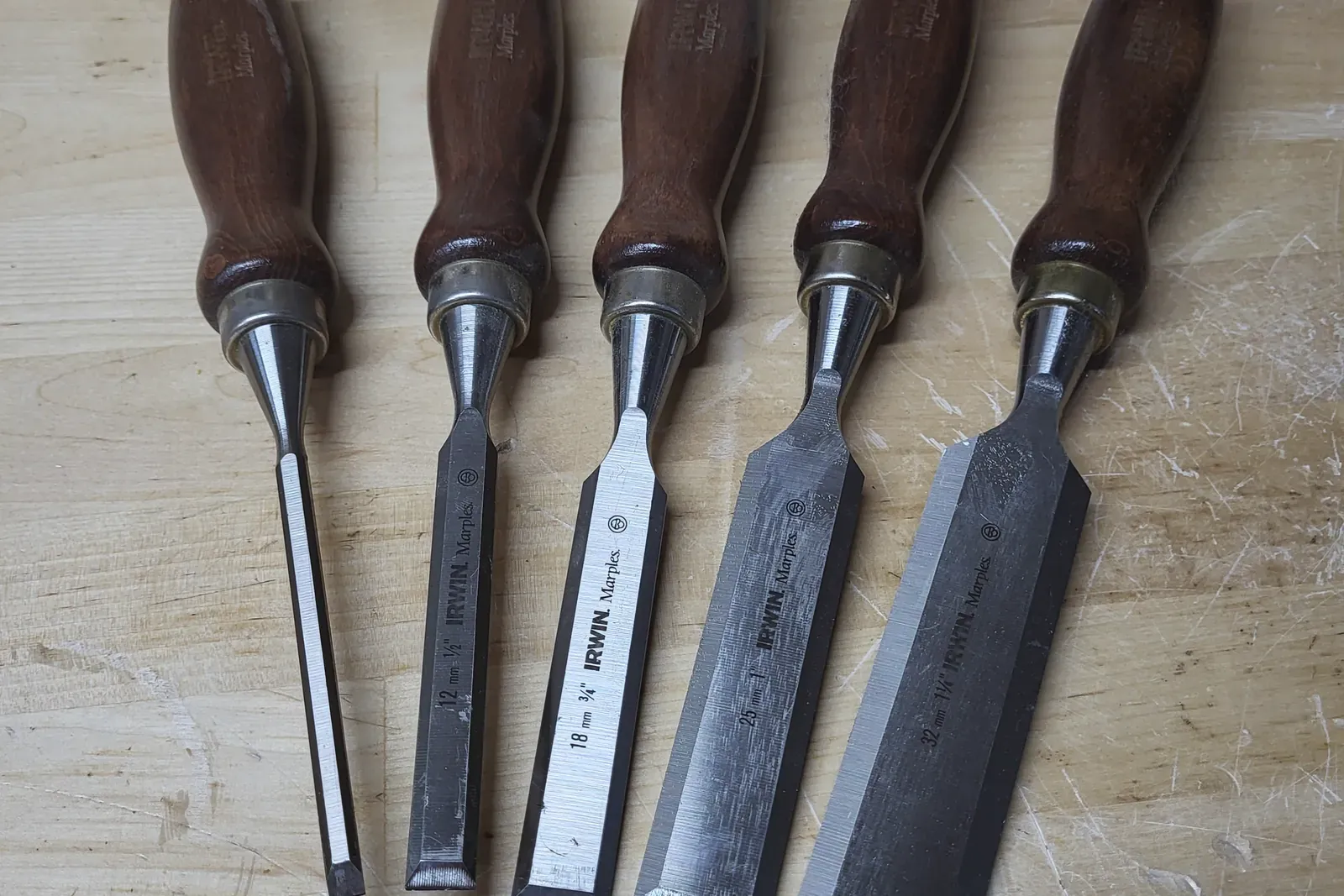
No prices here on purpose. Boggs only says diamond costs more up front. Which chisels to sharpen is the chisel set guide. The photo shows chisels. It is not a stone.
Where this comes from
- Fine Woodworking (Brian Boggs). Get sharp the diamond way (2014). Guide. Fine Woodworking (Brian Boggs) Consulted 31 Oct 2026. back
- Fine Woodworking (David Charlesworth). A user’s guide to waterstones (2004). Guide. Fine Woodworking (David Charlesworth) Consulted 31 Oct 2026. back
- Fine Woodworking (Deneb Puchalski). Flatten waterstones with a coarse diamond stone (2011). Expert answer. Fine Woodworking (Deneb Puchalski) Consulted 31 Oct 2026. back
- Richard Maguire, The English Woodworker. Sharpening stone types and preference (2014). Woodworker’s blog. Richard Maguire, The English Woodworker Consulted 31 Oct 2026. back
- Tools for Working Wood. Choosing a sharpening system: which stones are right for me? (2019). Shop blog (commercial). Tools for Working Wood Consulted 31 Oct 2026. back
Changes in this guide
- First version.
Common questions
Is the photo a sharpening stone?
No. The photo is a box of used chisels at a fair. It is not a stone, a plate or a brand I am recommending.
Which grits do the sources actually name?
Charlesworth’s starter water stones are 800, 1200 and 6000, with 8000 as an option. Tools for Working Wood names a Norton 1000/8000 combination stone as the budget water stone. Puchalski flattens with a 120-micron diamond plate. None of them gave me a diamond-plate grit list I can repeat as a set.
Can I start on sandpaper?
Tools for Working Wood says paper is cheap and easy to find, but the finest grits are hard to find and it cuts slowly. Their cheap start is lapping film, and they say replacing it costs more than stones over time.